EU leaders land in New Delhi for 16th EU–India Summit, attend Republic Day as guests of honour
The European Council said Presidents António Costa and Ursula von der Leyen travelled to India for the 16th EU–India Summit on 27 January 2026. The leaders also joined India’s Republic Day celebrations on 26 January, highlighting a push to expand cooperation on trade, security, technology and the clean transition.
A summit visit with Republic Day diplomacy built in
The European Council announced that European Council President António Costa and European Commission President Ursula von der Leyen would travel to India to represent the EU at the 16th EU–India Summit in New Delhi on 27 January 2026. The visit was designed to build on the EU–India strategic partnership and to drive collaboration across priority areas that both sides say are becoming more urgent in a volatile world. ([consilium.europa.eu](https://www.consilium.europa.eu/en/press/press-releases/2026/01/15/president-costa-to-travel-to-india-for-a-high-level-summit-on-27-january-2026/?utm_source=openai))
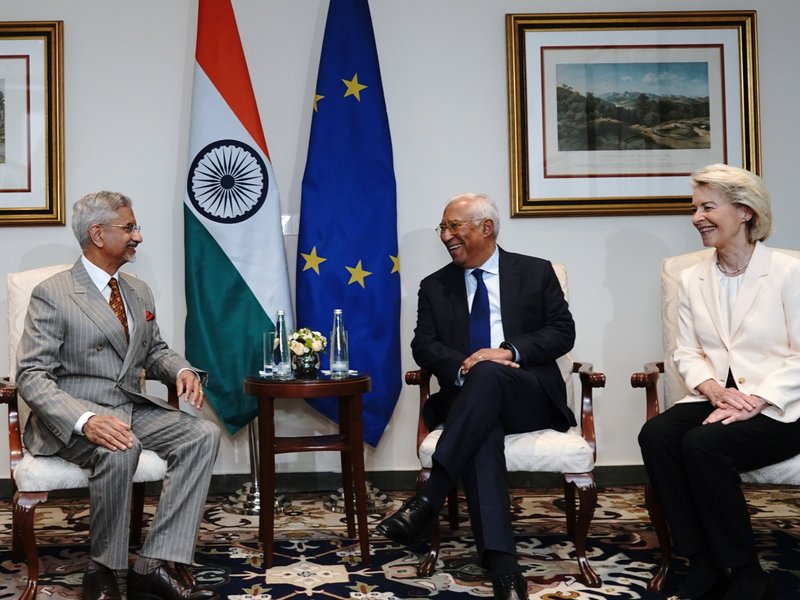
In the same announcement, the European Council confirmed the two leaders would also participate in India’s 77th Republic Day parade on 26 January as guests of honour, calling it a marker of strengthening ties. Separately, Indian media reported that this was the first time two top EU leaders jointly attended India’s Republic Day celebrations as chief guests, underscoring the political weight placed on the visit. ([consilium.europa.eu](https://www.consilium.europa.eu/en/press/press-releases/2026/01/15/president-costa-to-travel-to-india-for-a-high-level-summit-on-27-january-2026/?utm_source=openai))
What’s on the agenda: trade, security, clean transition
According to the European Council, the summit’s agenda includes trade, security and defence, the clean transition, and people-to-people cooperation. The statement framed India as a “crucial partner” and linked the engagement to protecting a rules-based international order—language that reflects Europe’s wider push to diversify partnerships and supply chains. ([consilium.europa.eu](https://www.consilium.europa.eu/en/press/press-releases/2026/01/15/president-costa-to-travel-to-india-for-a-high-level-summit-on-27-january-2026/?utm_source=openai))
Indian outlets, citing official briefings, also pointed to expectations that talks would elevate economic cooperation, with trade pact discussions frequently referenced as being in the final stretch. The Republic Day optics, followed by the summit, effectively turned a ceremonial invitation into a two-day diplomatic runway for policy announcements. ([indiatoday.in](https://www.indiatoday.in/india/story/india-eu-trade-deal-republic-day-european-union-tariff-cut-car-imports-ursula-leyen-2857869-2026-01-26?utm_source=openai))
Why this matters for India
For New Delhi, the visit signals that the EU wants deeper engagement with India on commerce, technology standards and geopolitical coordination, while India gains a platform to project itself as a stable partner and large market. Von der Leyen’s public messaging after Republic Day—linking India’s success with global stability—reinforced that framing. ([indiatoday.in](https://www.indiatoday.in/india/story/india-eu-trade-deal-republic-day-european-union-tariff-cut-car-imports-ursula-leyen-2857869-2026-01-26?utm_source=openai))
The timing is also notable: January 2026 has seen heightened attention on trade barriers, supply-chain resilience, and technology competition globally, creating an incentive for both sides to show forward movement in a highly visible manner. While concrete outcomes depend on the summit’s final announcements, the visit itself was structured to make the partnership headline news across both regions. ([consilium.europa.eu](https://www.consilium.europa.eu/en/press/press-releases/2026/01/15/president-costa-to-travel-to-india-for-a-high-level-summit-on-27-january-2026/?utm_source=openai))