Eon Space Labs’ AI Earth-imaging payload MIRA planned on PSLV-C62 to process images in orbit
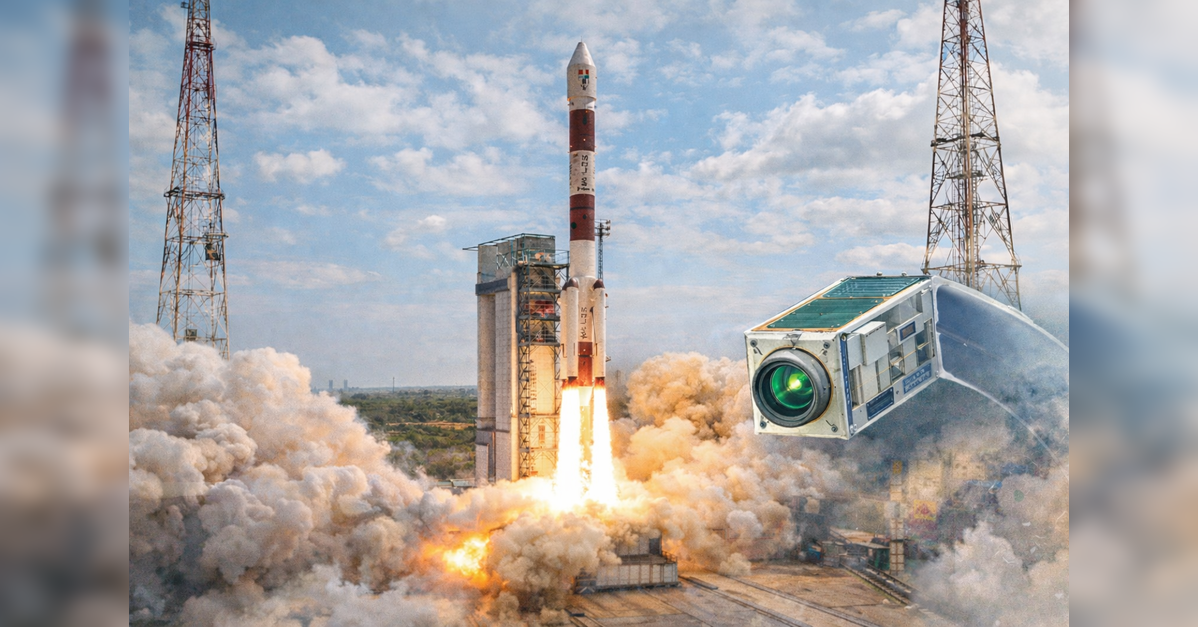
Hyderabad-based Eon Space Labs planned to fly its indigenous multispectral Earth-imaging payload MIRA on ISRO’s PSLV-C62 mission to demonstrate on-board AI processing. The system is designed to analyse images in orbit and transmit insights instead of raw imagery, aiming to reduce bandwidth requirements for Earth observation workflows.
A push for ‘in-orbit AI’ in Earth observation
Hyderabad-based Eon Space Labs said it planned to launch its multispectral Earth-imaging payload, MIRA, aboard ISRO’s PSLV-C62 mission, aiming to demonstrate artificial intelligence processing directly in orbit. The approach is meant to shift part of the analysis from ground stations to space, sending prioritised insights rather than large volumes of raw data.
How MIRA is expected to work
MIRA is described as an indigenous Earth-observation optical payload that uses on-board AI to analyse imagery in orbit. By extracting information before transmission, such payloads can reduce downlink loads and potentially shorten the time taken to turn satellite images into actionable outputs for users such as planners, responders and researchers.
Integrated on a CubeSat platform
According to the report, MIRA was integrated with MOI-1, a 14-kg CubeSat developed by Hyderabad-based TakeMe2Space. CubeSats are increasingly used to validate new sensors and computing concepts at lower cost and shorter development timelines compared to large satellites.
Why on-board processing is gaining attention
Earth observation has expanded rapidly, but transmitting and storing high-resolution imagery at scale creates bottlenecks. In-orbit AI can help by filtering, compressing or extracting features—making satellite data more usable for time-sensitive applications where speed matters as much as resolution.